
How to Build a Learning Culture in Your Organisation
In today’s rapidly changing business landscape, organisations can no longer rely solely on hiring new talent to stay competitive. Technology is evolving faster than ever, job roles are changing, and employees need to continuously develop new skills to keep pace. The organisations that thrive are those that create an Organisational Culture where learning isn’t an occasional event-it should become part of everyday work and development.
A learning culture encourages employees at every level to develop their skills, share knowledge, and embrace continuous improvement. Rather than viewing training as a one-off exercise, businesses with strong learning cultures see development as an ongoing investment in their people.
The benefits are significant-not only for employees but for the organisation’s performance, innovation and long-term success.

But Why does a Learning Organisational Culture Matter?
According to the LinkedIn Workplace Learning Report 2025, nearly half (49%) of Learning and Development professionals say executives are concerned that employees lack the skills needed to deliver business strategy. The report also found that 84% of employees believe learning adds purpose to their work, highlighting the connection between professional development and employee engagement.
The pace of workplace change is also accelerating. LinkedIn predicts that the skills required for many jobs will continue to evolve dramatically over the coming years, making continuous learning essential rather than optional.
Organisations that invest in learning aren’t just helping staff gain qualifications — they’re building a workforce that’s ready to evolve and thrive as circumstances change.
The Business Benefits of a Learning Organisational Culture
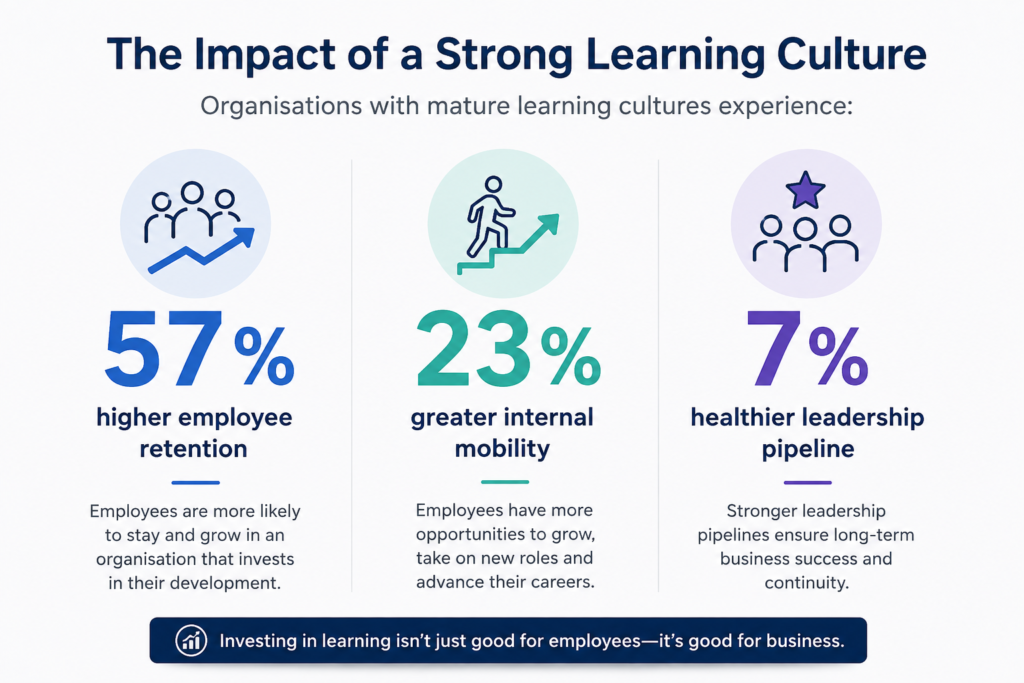
Other benefits…
Replacing experienced employees is expensive. Recruiting, onboarding and training new staff can cost thousands of pounds per employee. By helping people develop and progress internally, organisations reduce turnover while preserving valuable knowledge and experience.
Learning also supports innovation. Employees who regularly develop new skills are more confident solving problems, embracing new technology and identifying opportunities for improvement.
But How Does This Support an Organisational Culture?
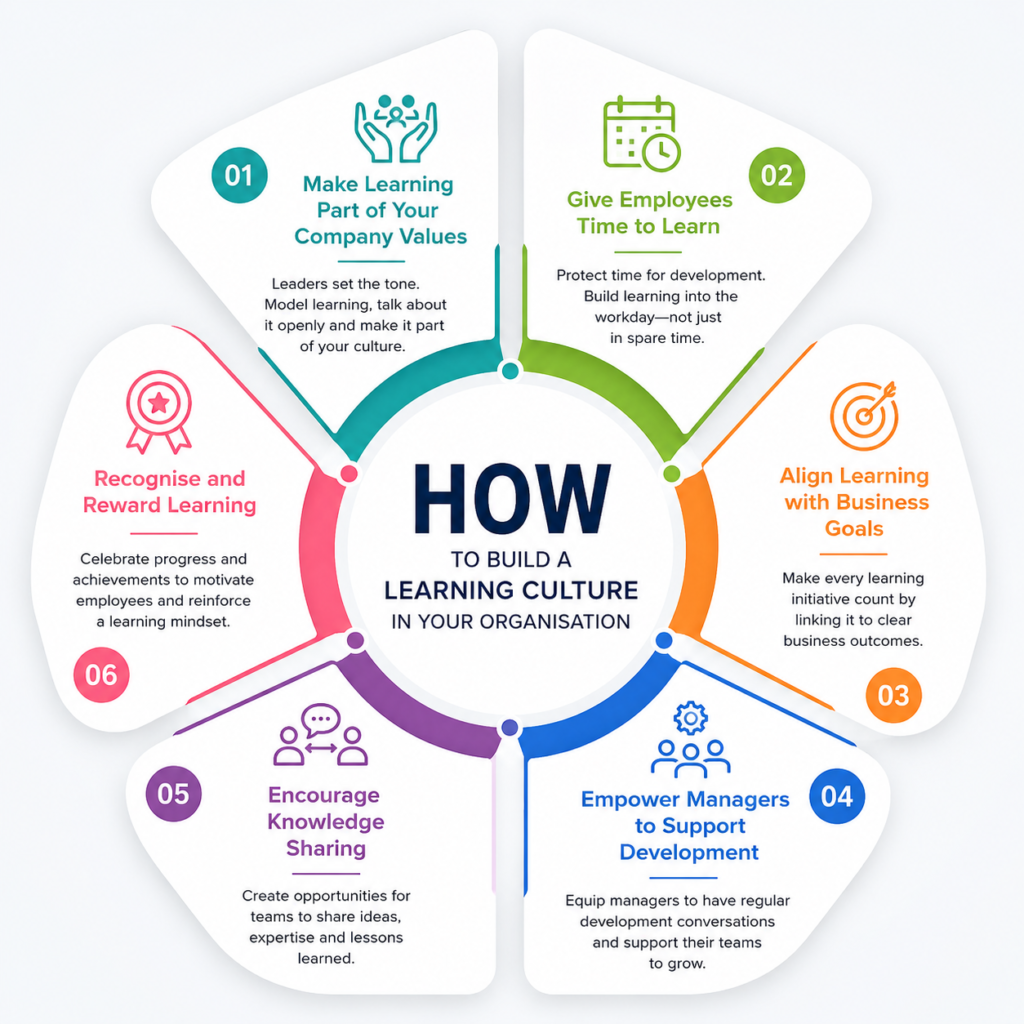
- Make Learning Part of Your Company Values
- Give Employees Time to Learn
- Align Learning with Business Goals
Creating a learning culture starts with leadership.
If development is only discussed during annual appraisals or mandatory compliance training, employees quickly see learning as a box-ticking exercise.
Instead, leaders should actively demonstrate their own commitment to learning by:
- Attending training themselves
- Sharing books, podcasts and industry insights
- Talking openly about lessons learned
- Encouraging experimentation and innovation
When leaders model continuous learning, employees are far more likely to follow.
One of the biggest barriers to workplace learning is time.
Many employees genuinely want to develop but struggle to balance learning alongside their daily responsibilities.
Successful organisations build learning into the working week by offering:
- Monthly learning hours
- Lunch-and-learn sessions
- Microlearning modules
- Coaching and mentoring
- Online learning platforms
Learning should be viewed as productive work—not something employees must squeeze into evenings or weekends.
Align Learning with Business Goals
Training should never exist simply because “it’s always been done.”
Every learning initiative should answer one question:
How will this help our organisation achieve its objectives?
For example:
- Leadership training prepares future managers.
- Customer service training improves client satisfaction.
- AI training increases productivity.
- Communication skills reduce workplace misunderstandings.
- Compliance training reduces organisational risk.
When employees understand why learning matters, engagement naturally increases.
Managers play one of the most important roles in creating a learning culture.
According to LinkedIn, organisations with successful learning strategies equip managers to have regular career conversations with employees and actively support their development.
Managers should regularly ask questions such as:
- What skills would you like to develop?
- What challenges are you facing?
- How can I help you grow?
- What opportunities would stretch your abilities?
Development shouldn’t be confined to annual reviews—it should become part of everyday conversations.
Learning isn’t limited to formal courses.
Some of the most valuable development happens when colleagues share their expertise.
Consider introducing:
- Internal workshops
- Peer mentoring
- Communities of practice
- Cross-department projects
- Team presentations
Knowledge sharing builds collaboration while reducing reliance on individual experts.
It also reinforces learning, as teaching others helps people retain information more effectively.
People repeat behaviours that are recognised, celebrating learning achievements encourages others to participate.
Recognition doesn’t always require financial rewards.
Simple approaches include:
- Certificates
- Internal recognition awards
- LinkedIn recommendations
- Promotion opportunities
- Sharing success stories in company newsletters
Employees who see learning valued across the organisation are more likely to invest in their own development.
Structured training doesn’t just fix mistakes — it prevents them, reducing avoidable errors and saving valuable time and money. You can explore this further in our blog on measuring the impact of effective training.
Creating a Learning Culture Takes Time…
There is no single training course that creates a learning culture overnight.
Instead, it develops through consistent leadership, supportive managers, meaningful development opportunities and recognition of continuous improvement.
As Microsoft CEO Satya Nadella famously described it, organisations need to move from a “know-it-all” culture to a “learn-it-all” culture—a mindset that encourages curiosity, adaptability and growth. This philosophy aligns closely with modern research showing that organisations prioritising learning are better equipped to navigate rapid technological and workplace change
Final Thoughts
The future belongs to organisations that invest in their people.
As AI, automation and changing customer expectations reshape industries, businesses that encourage continuous learning will be better positioned to innovate, retain talent and remain competitive.
Building a learning culture isn’t about delivering more training courses. It’s about creating an environment where learning is part of everyday work, supported by leaders, embraced by managers and valued by every employee.
When learning becomes a habit rather than an event, organisations become more agile, employees become more engaged, and business performance improves.
If you are interested in either online or ace to face training, please see our range on online and face to face options we have available: Click here or click here for the direct link to our range of online training options.
References:
- LinkedIn Workplace Learning Report 2025: https://business.linkedin.com/learn/resources/workplace-learning-report
- LinkedIn 2024 Workplace Learning Report: https://www.linkedin.com/business/talent/blog/learning-and-development/2024-workplace-learning-report
- LinkedIn: 6 Must-Haves for a Successful Learning Culture: https://www.linkedin.com/business/talent/blog/learning-and-development/must-haves-for-a-successful-learning-culture
Leave a Reply